

CIGRE Paris Session 2026: Key Takeaways from an Australian Perspective
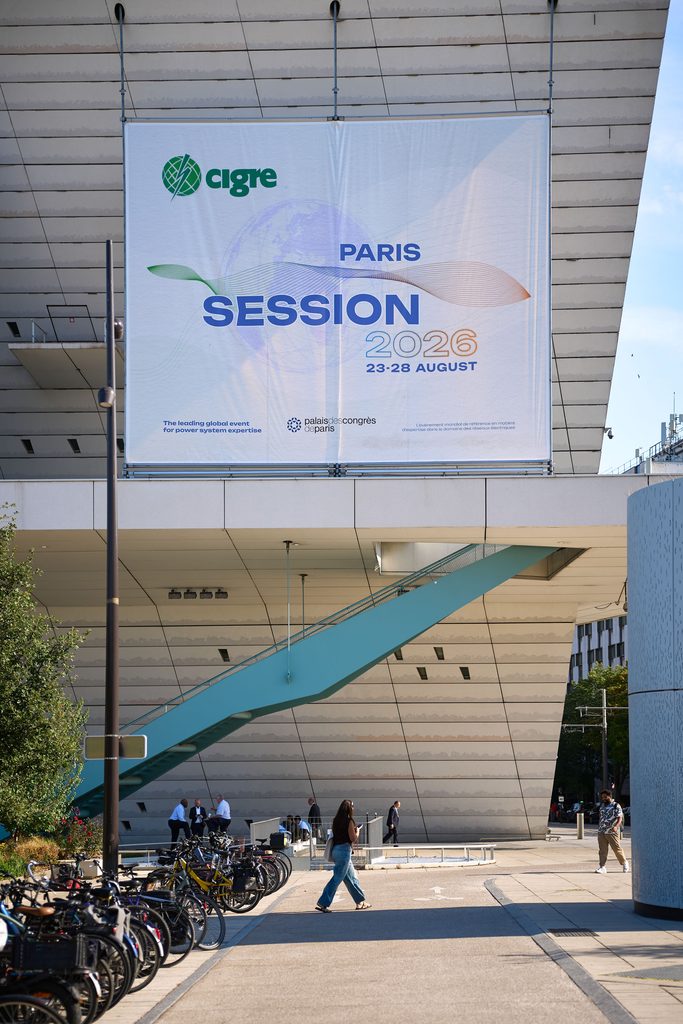
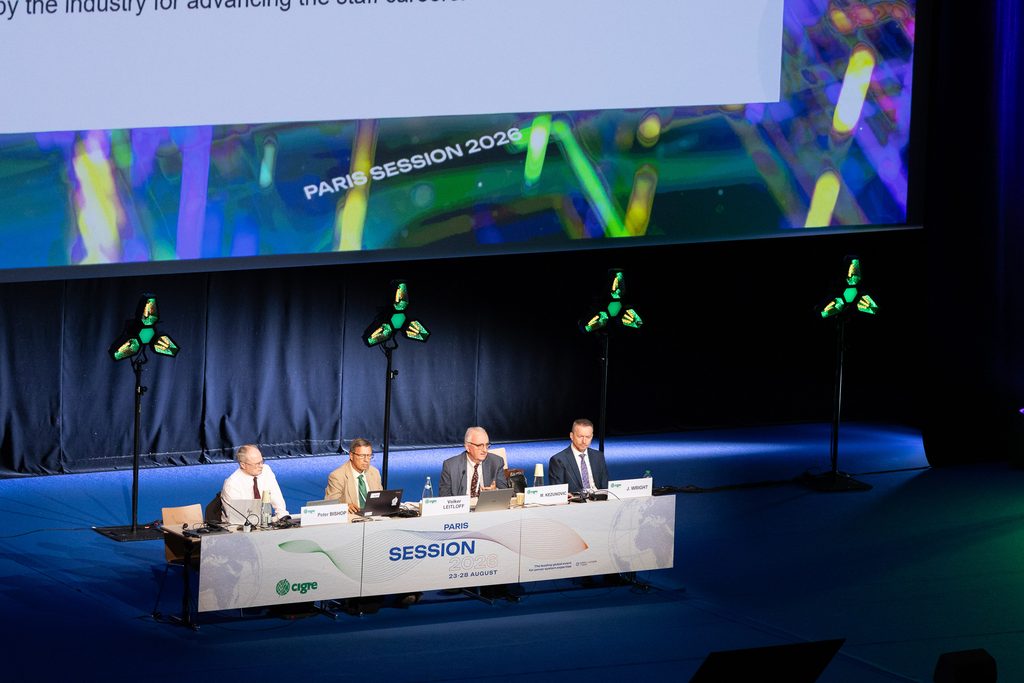
The biennial CIGRE Paris Session is the world’s largest gathering of power system experts. In August, more than 5,500 delegates from over 90 countries came together to discuss the challenges shaping the future power system, from electrification and renewables integration to grid resilience, digitalisation, AI and data centres.
This article explores a number of key themes from the Paris Session from an Australian perspective.
There is no Plan B because there is no Planet B
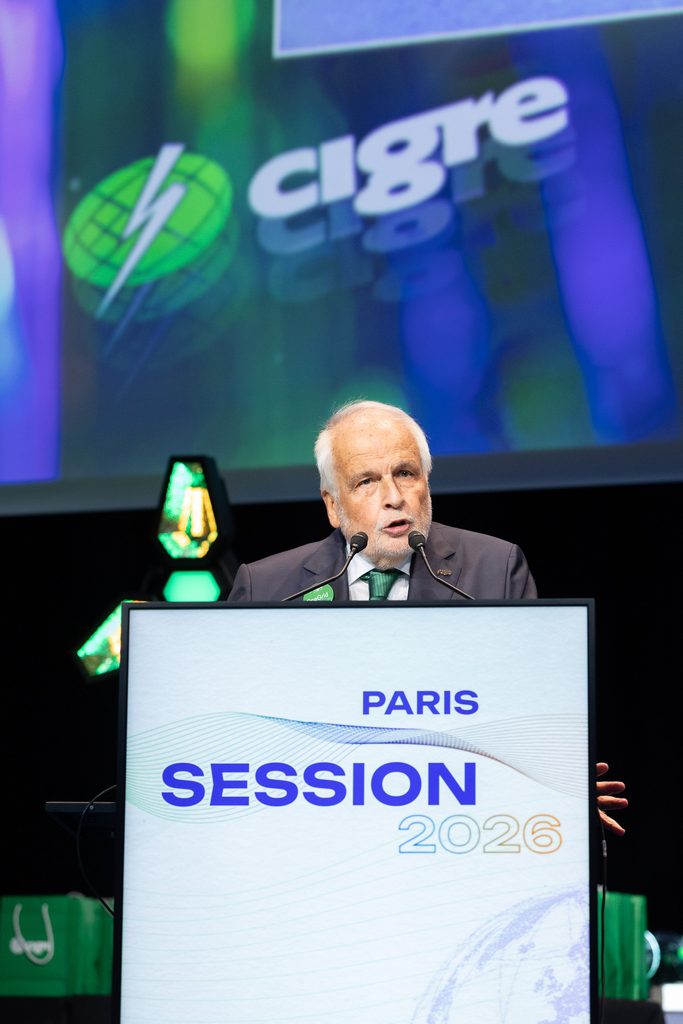
CIGRE President Konstantin Papailiou’s opening address refrain: “There is no Plan B, because there is no Planet B”1 was a call to action for CIGRE members around the world to apply their knowledge and experience to decarbonising the power/energy system and thereby slowing/minimising the impact of climate change.
The energy transition is now as much about resilience, security and delivery as decarbonisation
The opening keynote by Tim Meyerjürgens, CEO of TenneT, set the tone for the week by arguing that the energy transition has entered a new phase. While decarbonisation remains essential, the focus is increasingly on resilience, energy security, supply chain capability and the ability to deliver infrastructure at scale. A recurring message was that climate change, geopolitical risks and growing dependence on electricity mean that power systems have become strategic national assets. He highlighted standardisation as a “superpower” that enables innovation to be deployed quickly and consistently and emphasised that renewables must become full system participants through technologies such as grid-forming inverters and advanced system services.
From an Australian perspective, this aligns strongly with current NEM priorities. As renewable penetration continues to increase, the challenge is no longer simply building more renewable generation, but ensuring the system remains secure, resilient and affordable while delivering the energy transition at pace. Australia’s leadership in inverter integration, system strength frameworks and grid-forming technology places it at the centre of this global discussion.
Australia remains at the global forefront of the energy transition
Many discussions reinforced that Australia continues to be one of the world’s leading case studies in operating a high-renewable, high-inverter power system. Australia’s experience with rooftop solar, batteries, system strength, inverter integration, protection schemes and market design attracted strong international interest. Several participants observed that challenges Australia has faced over recent years are only now emerging elsewhere.
At the same time, there was recognition that the rest of the world is catching up rapidly, particularly in field testing inverter-based resources, validating models and developing operational solutions. Australia should continue learning from international experience while sharing its own lessons.
“One Grid” thinking is becoming essential
One of the strongest themes, reinforced by CIGRE’s newly launched One Grid initiative, was the increasing interdependence of transmission networks, distribution systems, distributed energy resources, electrification and emerging large loads. The concept of “One Grid” emphasises planning, operating and governing the electricity system as a single integrated system rather than separate transmission and distribution domains.
This resonates strongly with Australia’s energy transition, where coordination between transmission, distribution and consumer energy resources is becoming increasingly important.
Resilience is becoming a core planning challenge
Across technical sessions, workshops and tutorials, there was growing recognition that resilience must become a central planning objective.
Participants highlighted that systems cannot wait for perfect information and must continue to develop their capabilities while data and evidence evolve. The focus is shifting from deterministic planning approaches towards understanding complex interactions, uncertainty and aggregate system risk.
For Australia, this reinforces the importance of continued work on system strength, resilience planning, operational preparedness and management of increasingly complex inverter-dominated systems.
Large disturbances reveal emerging system risks
Case studies from Chile, Spain, India and the UK demonstrated that major system events can occur under otherwise normal operating conditions and may be driven by complex interactions among protection systems, voltage management and operational controls, rather than by major plant outages alone. Several events highlighted gaps between modelled and actual system behaviour.
For Australia, these examples reinforce the need to understand emerging failure modes in increasingly complex power systems and to ensure that operational and planning frameworks evolve accordingly (our General Power System Risk Review and Transition Plan for System Security frameworks are standout examples internationally).
Data centres have become a major global challenge
Data centres were one of the most discussed issues throughout the session. Common themes included the inability of transmission and generation development to keep pace with data centre demand, uncertainty about future load growth, and the difficulty of forecasting load profiles for AI-driven facilities. In many jurisdictions, proposed data centre demand exceeds existing system capacity.
A key emerging policy response is the expectation that data centres act not only as customers but also as reliability partners through demand flexibility, onsite generation or other forms of system support. This is directly relevant to current Australian policy discussions on large-load connections.
Planning and coordination are becoming more important
A recurring theme, particularly in Carlos Batlle’s keynote at the CEO Forum, was that the assumptions underpinning traditional electricity market liberalisation no longer fully reflect current realities.
Future success will depend on better coordination across planning, investment, networks, markets and policy. Several speakers highlighted the increasing importance of long-term planning institutions and integrated decision-making frameworks.
This strongly aligns with Australian debates around transmission planning, renewable integration, consumer impacts and coordination across the energy sector.
Standardisation is a strategic enabler
The importance of standardisation arose repeatedly. Standardisation was presented as a critical tool for accelerating deployment, reducing costs, improving interoperability and strengthening supply chains. Strong technical standards enable lessons learned in one jurisdiction to be applied quickly and consistently elsewhere.
For Australia, this reinforces the value of continued engagement in international technical bodies such as CIGRE and the IEC.
Workforce and supply-chain capability will shape the pace of the transition
Workforce shortages, ageing infrastructure, supply-chain constraints and manufacturing capacity were common concerns across jurisdictions.
Speakers emphasised that achieving the scale of grid investment required will depend not only on capital but also on engineering capability, skills development and effective supply chains.
For Australia, ensuring sufficient technical capability, attracting skilled workers and building resilient supply chains will continue to be critical enablers of the transition.
Other key messages
• Energy efficiency should be prioritised. Energy efficiency creates capacity now.
• Legacy grids were not designed to be renewable grids. We are adapting legacy grids to become renewable grids.
• A discernible shift in emphasis from net zero to electrification, resilience and affordability
• Strong progress on more sustainable SF6-free equipment. Is Australia keeping up?
• Dynamic line ratings for boosting transmission grid capacity. Is this getting enough attention in Australia?
Rainer Korte
Chairman, CIGRE Australia

- The saying “There is no plan B, because there is no planet B” gained global prominence when Ban Ki-moon, then
Secretary-General of the United Nations, used it to highlight the urgency of climate action ahead of the 2014 UN
Climate Summit in New York. That message is just as important today ↩︎